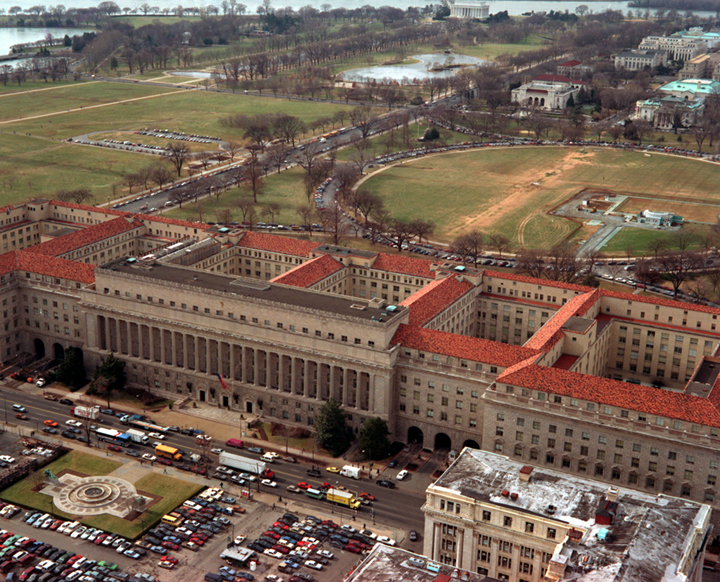
The Export Administration Regulations (EAR) are administered by the Bureau of Industry and Security (BIS), part of the U.S. Department of Commerce in the heart of Washington, DC.
Commerce headquarters is at 1401 Constitution Avenue NW, in the Herbert C. Hoover Building. The main visitor entrance is on 14th Street.
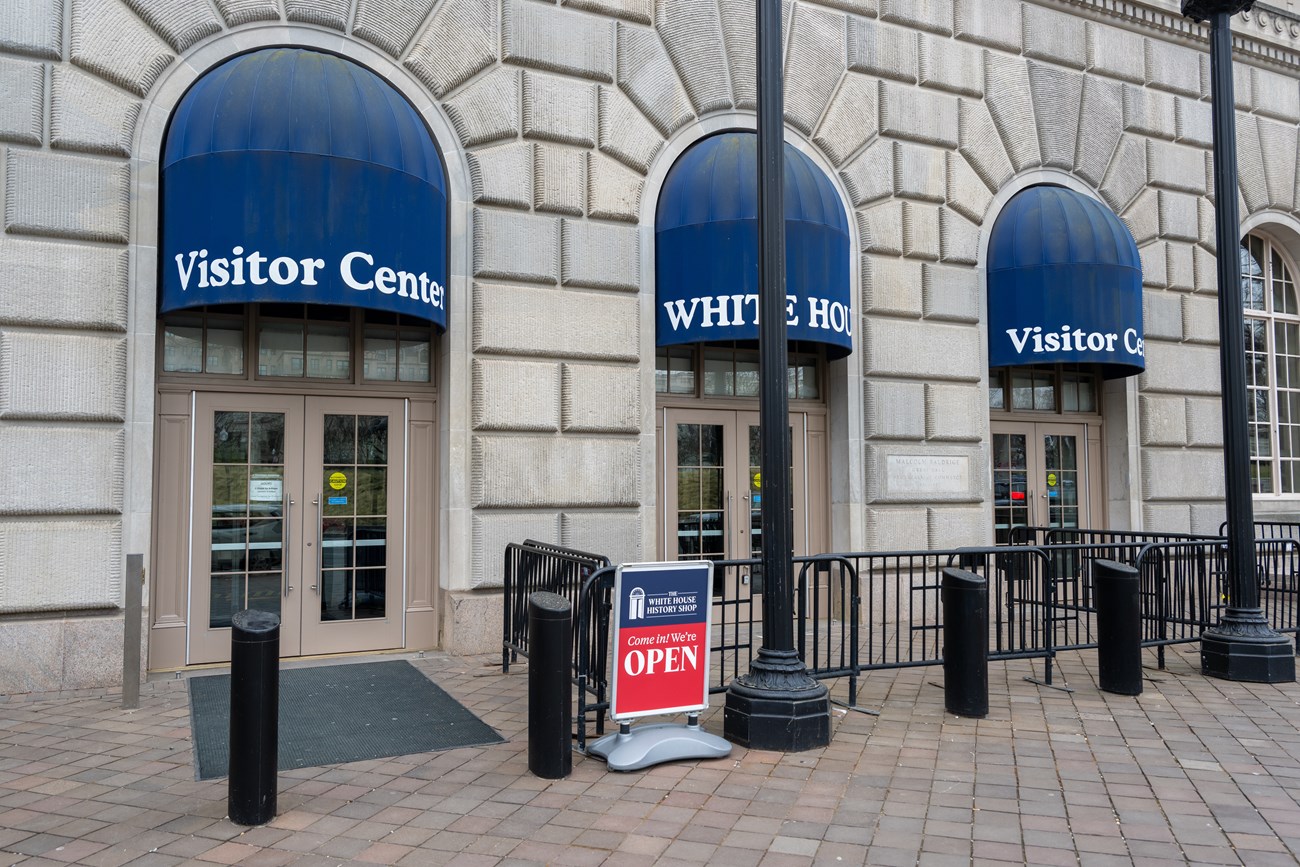
For a visit to Commerce offices, non-federal visitors need a sponsoring employee and an escort. The White House Visitor Center is a public destination on the north side of the same building, with its own entrance at 1450 Pennsylvania Avenue NW.
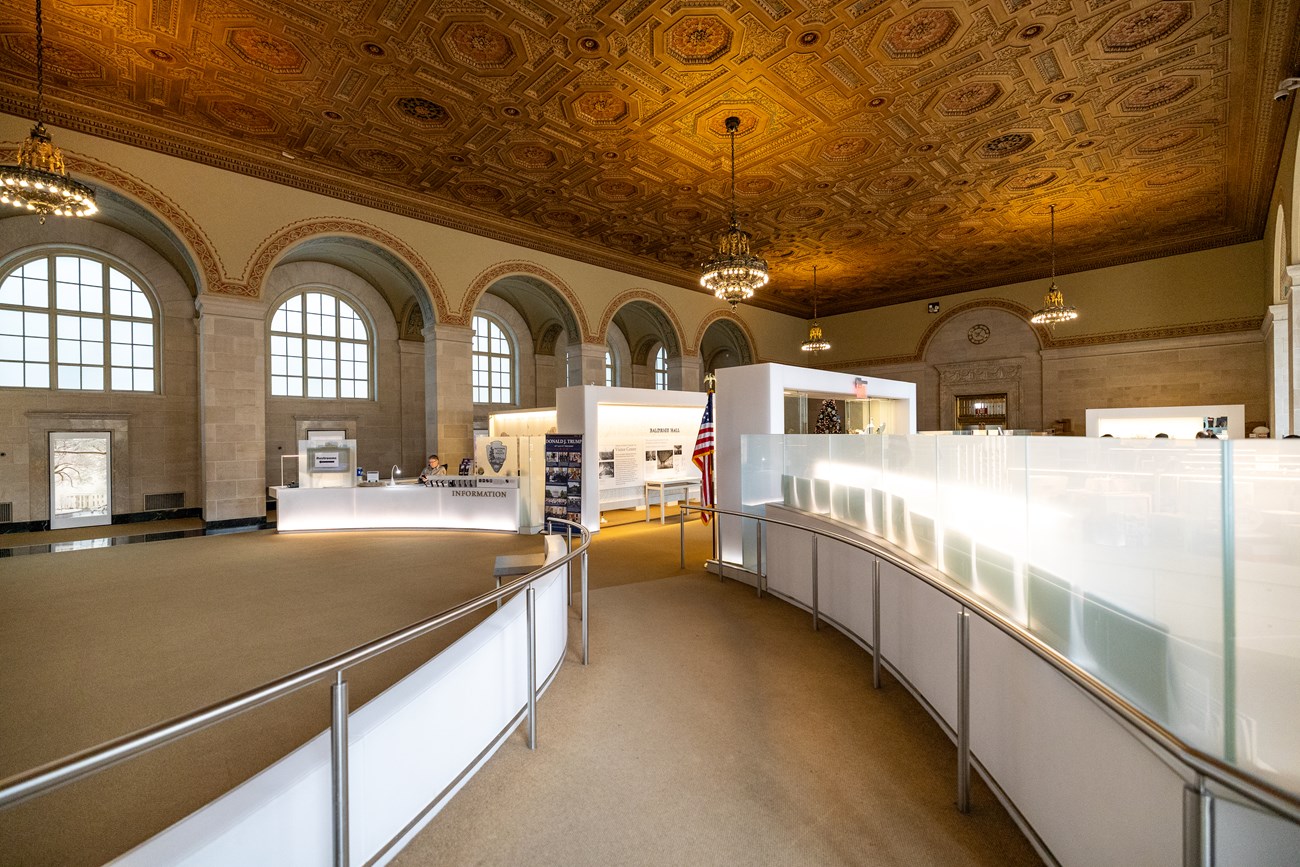
Inside, you can explore White House history through artifacts, exhibits, interactive displays, and a short film. Admission is free, and entry includes security screening.
The Ronald Reagan Building and International Trade Center, at 1300 Pennsylvania Avenue NW, offers a public underground garage with about 2,000 spaces.
There are two garage entrances on 14th Street between Constitution and Pennsylvania Avenues, plus an entrance at 13½ Street off Pennsylvania Avenue. The garage operates 24 hours a day; vehicles are screened on entry.
Bring valid identification, such as a U.S. passport or REAL ID-compliant photo ID, and allow time for security. After screening, you can explore the building’s public areas, including its food court.
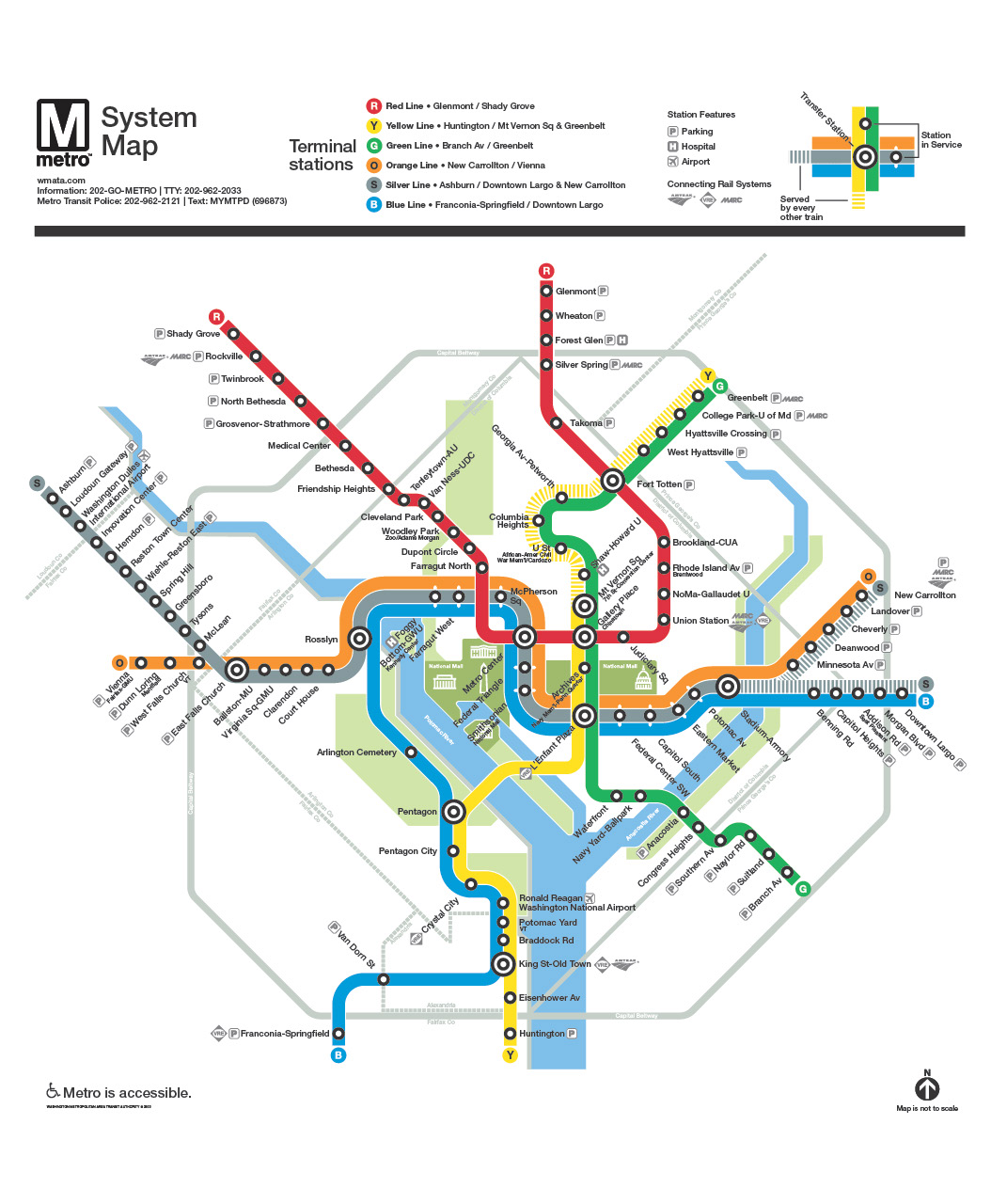
Federal Triangle station serves the Blue, Orange, and Silver lines. A covered Metro-level passage connects the station with the Reagan Building. From there, continue on the concourse to the food court.
The visitor center has restrooms, accessible entry, seating, and an information desk. The nearby Reagan Building has public restrooms and dining. Check the official visitor pages when planning your trip.
NOW, THE EAR
The rules behind the technology.
The EAR govern exports, reexports, transfers within a foreign country, and certain other activities involving items under Commerce’s authority. Those items include commodities, software, and technology.
SCOPE & PURPOSE
What the EAR reach.
Why the controls exist
Export controls advance U.S. national security, foreign policy, and nonproliferation interests. The EAR cover many civilian and dual-use items, along with certain military items within Commerce’s jurisdiction. Dual-use technologies have commercial applications as well as potential military or other sensitive applications.
Some controls concern an item’s technical capabilities. Others concern its destination, recipient, intended use, or a particular activity.
Items and activities
The scope can include items located in the United States, U.S.-origin items abroad, and certain foreign-made items that meet the EAR’s U.S.-content or foreign-direct-product rules. Determining whether an item is subject to the EAR comes before classification and licensing analysis.
International shipments, hand-carried equipment, electronic transfers, and releases of controlled technology or source code can all be relevant.
Export
A shipment or transmission from the United States to another country. Certain technology and source-code releases are also exports.
Reexport
A shipment or transmission of an item subject to the EAR from one foreign country to another.
Transfer in-country
A change in an item’s end use or end user within the same foreign country.
The Commerce Control List (CCL), in Supplement No. 1 to Part 774, organizes listed commodities, software, and technology into ten categories and five product groups. An Export Control Classification Number (ECCN) identifies a particular entry.
Nuclear materials, facilities, equipment, and miscellaneous items
1
Materials, chemicals, microorganisms, and toxins
2
Materials processing
3
Electronics
4
Computers
5
Telecommunications and information security
6
Sensors and lasers
7
Navigation and avionics
8
Marine
9
Aerospace and propulsion
The five product groups
A
Equipment, assemblies, and components
B
Test, inspection, and production equipment
C
Materials
D
Software
E
Technology
How an item is classified
Compare its specifications with the CCL using the Order of Review. The manufacturer may supply a classification, an exporter may self-classify, or BIS may issue an official classification through SNAP-R.
Where EAR99 fits
An item subject to the EAR that is not described by a CCL entry is designated EAR99. Many EAR99 transactions proceed without a license, but destination, end-user, and end-use restrictions can still apply.
An ECCN is different from a Schedule B or Harmonized Tariff System code.
Advanced computing integrated circuits meeting the technical parameters in ECCN 3A090 are a clear example. Other semiconductor entries address specified electronic components and semiconductor-manufacturing equipment.
Semiconductors also connect to software and technology controls: a physical chip, manufacturing equipment, design software, and production know-how can fall under different entries.
Follow the item
An advanced computing chip can be installed in a server; that server can become part of a computing cluster; the cluster can operate in an overseas data center.
Example
CCL entry
What the entry addresses
Advanced computing chips
3A090
Integrated circuits meeting the entry’s computing parameters.
A data center brings together servers, storage, networking, power, and cooling to process and retain information.
AI and high-performance computing facilities can combine large numbers of processors and accelerators. Networking connects those machines, while electrical and cooling systems support their operation.
For EAR purposes, the relevant questions include which chips, servers, software, and technology are involved; where they will be located; who will receive or operate them; and their intended use.
BIS identifies advanced computing items in entries including 3A090 and 4A090. Controls can also depend on an operator’s headquarters or ultimate parent company, in addition to the location of the hardware.
ComputeProcessors, accelerators, servers, and computing clusters.Connect & storeNetworks and storage that move and retain information.Power & coolContinuous electrical supply and systems that remove heat.
Classification is one part of the review. A transaction also involves a destination, parties, an end user, and an intended end use.
Destination and reasons for control
An ECCN lists its reasons for control. The Commerce Country Chart helps determine destination-based requirements for those reasons. Country-specific restrictions in Part 746 and other EAR provisions also apply.
End users and end uses
Part 744 addresses end-user and end-use controls. These can apply to transactions involving EAR99 items and transactions that would not otherwise need a license based on classification and destination.
License, exception, or NLR
A license is an authorization issued by BIS. A license exception is an authorization in the EAR that can permit a transaction under stated conditions. A transaction may also qualify for No License Required (NLR) when no applicable license requirement applies.
License and classification applications are submitted through SNAP-R. The applicable authorization and transaction records must be retained as required by the EAR.
The EAR contain provisions for published information, fundamental-research results, and information released through instruction in catalog courses and associated teaching laboratories. These provisions concern the information involved, with specific rules for encryption software.
Fundamental research
Qualifying fundamental research produces information ordinarily published and broadly shared within the research community. Restrictions accepted on publication can affect whether the research qualifies.
Equipment and incoming technology
Research equipment, proprietary software, third-party technology, and sponsor-provided information can remain subject to the EAR. A research project’s publishable results and the controlled items used in the project require separate consideration.
Activities to review
International equipment shipments, research travel, software transfers, controlled technology access, and international collaborations can raise EAR questions. An institution’s export-control office can assist with classification, licensing, screening, and technology-control plans.
A release of controlled technology or source code to a foreign person in the United States can be a deemed export. A release can occur through visual inspection, oral or written exchanges, or other access described in the EAR.
Whether authorization is required depends on the technology or source code, the person involved, and the applicable rules. U.S. citizens, lawful permanent residents, and protected individuals are excluded from the deemed-export rule.